Posts Tagged ‘Aglianico’
Italian half-marathon
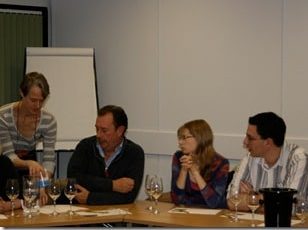
Italy is blessed with a very large number of local grape varieties. One of the standard guides lists more than 500, others speak of thousands. More importantly, it has a significant number of great varieties – however much it’s fun to have something local, you still want it to make good wine or better . This tasting, a fund raising event for Cancer Research, to support Laura and Adam who had run a half marathon, focused on nine varieties – plus a bonus one. As such the emphasis was on a comparison of styles around the peninsula. ![]()
The evening started with Prosecco, an obvious choice for an aperitivo. Mionetto is a good example of what makes this a winner – initially frothy mousse, moderate apple and floral notes, OK, not a serious wine but perfect as people gather. The Prosecco grape is capable of more, but most of it is just like this, but perhaps without the stylish bottle and crown cap (far left in the picture above). The second wine was a famous name in disguise. Soave is a well known area also in the Veneto, with whites made from the Garganega grape. This was an excellent example, with good lime fruit, perhaps a bit of yeast compexity and a fine finish. The example was not from Soave itself but is Alfa Zeta’s Garganega della provincia di Verona, good and inexpensive – it was one of the two wines we had had at a family wedding. Would that much Soave was as good as this IGT (higher table wine classification).
Two more ‘serious’ whites followed in quick succession – just as in a half-marathon you have to keep up you pace! Verdicchio is one of Italy’s top white grape varieties. It is good drunk young with the best examples capable of being aged. Our example was Stefano Manichelli’s Verdicchio dei Casteli di Jesi (2007) from near Ancona in the Marche. This was a slightly controversial wine. Pale lemon in colour, the first impression was of complexity on the nose, flowers and some fruit, a serious structure. But this is followed by quite a serious whack of alcohol – 14.5° according to the label and we no reason to doubt it! Clearly a substantial wine but one that lacked balance. Much more easy to appreciate was Greco di Tufo from the historic firm of Mastroberardino. Despite coming from much further south, inland from Naples, its pronounced floral and mineral nose is followed by both good acidity and a moderate 13° of alcohol. This brief trot around the whites showed something of the Italy’s riches, even without having a space for Cortese (ie Gavi), Arneis (also Piemonte), Falanghina (Campania) or Inzolia (Sicilia), never mind all the international whites made successfully in Italy.
![]()
Five reds followed, again a small sample of a large field of possible runners. With the supper which followed we re-tasted the other wedding wine. Made from the Barbera grape, this is a superb Piemontese food wine, excellent value, deep plum to cherry fruit, high acidity, good finish. The example was from Riva Leone 2007. Back to Campania, we followed this with an unusual example of Aglianico. This top grape variety is usually made either for quick drinking or it is kept on the vine for maxiumum maturity and given serious wood ageing before (eg as Taurasi). Our example showed that even the simple wine has some ageing capacity. The de Conciliis family produce highly individual wines near the great Greek temples at Paestum. Our IGT Paestum Donnaluna came from 2004 and showed mature damson fruit, some balsamic notes and with good grip and acidity. You couldn’t easily buy a simple wine with this much bottle age in Italy – you need a UK wine merchant to keep it for you for a few years!
Isole e Olena’s Chianti Classico 2006 is an established minor classic. Made from the Sangiovese grape which is Italy’s most planted variety (10% of all production), it delivers a classy combination of developing perfume on the nose (well integrated fruit and oak ageing), brilliant sour cherry on the palate and that characteristic mouth refreshing combination of acidity and tannin. It is a worthy standard bearer for Tuscany’s great reds.
The main tasting finished with two substantial if very different reds. Perhaps the most unusual wine of the evening was made from Lacrima di Morra d’Alba. We are back in the Marche here with a grape variety which normally produces lusciously fruity even velvety wines with mulberry and damson flavours – very unusual, very local. But this bottle is not the normal early drinking style but comes from a named vineyard and has been given the serious oak and ageing treatment (Vigna San Lorenzo, Fattoria San Lorenzo, 2004, 14°). It had dense black fruit, obvious oak even after six years, great persistence, very good if quite demanding. The final red was in a more famous style if made predominantly with the underrated Corvina grape. This variety produces both the light and easy drinking Valpolicella and its big brother, Amarone della Valpolicella. For the latter the best grapes and sites are selected. The fruit is then dried on racks with wine being made from semi-raisined berries and then aged in oak. It can be very expensive (with reason given the work involved and the low yields) but the Cantina di Negrar do a decent, typical, example at less than £20 (2006, 15°). Even a relatively young wine has a slightly brown tone and the fruit comes with fine balsamic and leather notes. Despite its high alcohol level, this is more than matched by its substance and flavours.
As a final lap, we tried a wine which is difficult to characterise. What colour is it? A wine with marmalade notes and a drying finish? De Conciliis not only do fine Aglianico (see above), they also make Antece, from the Fiano grape, another great Campanian white variety. But this is a wine made from white grapes but in a red style, ie the skins are kept in the fermenting must for a couple of weeks. Hence the name Antece – wine as made by the ancients – except there’s would have normally been sweet and no doubt often tainted as well! Once you get over the shock of a pale yellow to orange wine with some tannins and no sweetness, it’s mildly addictive. The Italian half marathon is full of surprise turns!
Thanks to all those who supported this event for Cancer Relief – even with a small group we still raised well over £200. And there are plenty of grape varieties to do another half marathon as soon as we have all done some more training.
Campania in the glass in England
Tasting in situ is a dangerous business. Wines can taste so much better when you are in the winery, the sun is shining or if the proprietor is particularly persuasive. So, it is good to have the chance to re-taste wines in a more neutral setting, with a bit of distance and with the comparison of other styles of wines to hand. After an autumn visit to Campania, Andover Wine Friends’ recent tasting was an opportunity to try the main styles again.
Campanian wines used to be known for the big, slow-evolving reds. The key wine is a version of Aglianico, the most important red grape, with long ageing potential. Called Taurasi it is grown around the small town of the same name. But there is much more to Campania nowadays, especially the whites made from local grape varieties. This tasting featured wines from three companies, two large players based in heart of the Campanian wine scene, Mastroberardino and Feudi di San Gregorio, and one medium size family firm, de Conciliis, much further south, quite close to the famous temples at Paestum. These wines are available in the UK, from Raeburn Fine Wines and Winedirect, both with good delivery services.
The evening started with de Conciliis’ very unusual sparker, Selim, made from the unlikely mix of Fiano (of which much
more), Aglianico, picked very young, and Barbera, a bit of a stranger in these parts. The sparkling bit is actually done up in Prosecco in northern Italy, to de Conciliis’ orders. These include an unusual 100 days on the lees, using the tank method, to gain extra complexity. It found favour, even on a cool, damp evening in northern Europe: bright, decent fruit (you can taste the fruit of the red grapes plus the high acidity of young Aglianico and Barbera), nice yeasty notes and the good acidity that sparkling wine needs.
At times it’s tempting to jump to the conclusion: although Campania is famous for its grand red wine, Taurasi, the stars of this evening – at least for me – were the three native white varieties. Falanghina, Greco and Fiano were never cut out to be a rock band or a firm of solicitors, but they are a great a trio of whites. None is really obviously fruit-led like Sauvignon Blanc or perfumed like Viognier, but they do have decent aroma, excellent texture, weight in the mouth and refreshing acidity. In short, they are full of character and superb food wines.
Of the three whites, first up was the staple of Campania, Falanghina. This can be merely competent, if never really dull like Tuscany’s Trebbiano. However, Feudi di San Gregorio’s Sannio Falanghina 2008 was much more than competent: pleasantly vegetal (perhaps even the bitterness of olives), almondy, followed by a shot of lime, and excellent texture. Mastroberardino’s Nova Serra Greco di Tufo 2008 has good citrusy notes, perhaps grapefruit, almost fleshy in substance and very persistent with great acidity. Then there was the same company’s Radici Fiano di Avellino 2008, rather more neutral on the nose, but herbaceous again and herby, very slightly honeyed, good texture. Although it is Fiano which is the prized grape, it was the other two in these young and medium priced wines (£11-£14 in the UK) which really stood out.
Of course Fiano can come in all sorts of styles, fresh and contemporary but occasionally
oxidative and aged. To demonstrate this style we had a bottle from 2003 of de Conciliis’ Antece. This ‘white made as red’ was an extraordinary colour, verging on amber despite it being only 7 years old. It leads with a good madeira style nose, marmalade and burnt sugar, but its weight in the mouth makes it a table wine, interesting if quite simple. Once people got over the shock of the style some warmed to its peculiar charms.
The evening of course had to end with those famous reds. Aglianico in Italy itself – especially from the barrel – can be a bit of an acidic/tannic challenge (see the post on Molletieri). What the wines need is time in the bottle. Two of our examples had just that. First, the ‘simple’ Aglianico of de Conciliis (‘Donnaluna’), not the young, bracingly vibrant examples we tasted in Italy but a bottle of 2004. This was rounded, dark cherries in there, with signs of good oak ageing … the acidity and tannins civilised by time.
Secondly, the classier wines of Taurasi, picked as late as possible in early November for maximum richness, with 12-18 months in oak making up a part of a minimum of three years ageing. The Radici Taurasi 2005 from Mastroberardino is a highly approachable and balanced wine after ‘only’ five years. This leads with evidence of oak ageing with mildly balsamic notes and also has a good depth of fruit.
Finally we had a rather older Taurasi from the single vineyard Piano
di Montevergine 2001 from Feudi di San Gregorio. This really took time to show itself. It had been double decanted two hours earlier but it was still rather mute in the glass to start with, but piano, piano it began to emerge from its rest in the bottle. The colour seemed pretty unchanged, perhaps the slightest hint of browning but still a good dense red. On the nose there was an initial leatheriness, perhaps the odd whiff of bacon but also good dense fruit and now silky tannins.
All in all this was an excellent tasting. Campania has so much to of
fer and this was a great opportunity to taste its individual, characterful and located wines.