
Northern Piemonte: Alto Piemonte, Carema & Caluso
When wine lovers think of Piemonte, they usually think of Barolo and Barbaresco. Yet, in the late nineteenth century, Northern Piemonte had around 40,000 hectares of vineyards, while the Langhe and Roero together covered only about half that area. Disease, hailstorms, two World Wars and migration to the new industrial cities led to a dramatic decline. In recent decades, however, the region has enjoyed a remarkable renaissance.
Today, Northern Piemonte is once again one of Italy’s most exciting wine regions. A new generation of producers has restored the reputation of historic denominations such as Gattinara, Ghemme, Lessona, Boca and Carema, while Erbaluce has emerged as one of Italy’s finest native white grape varieties. Despite this progress, the region remains far less familiar than the Langhe, offering adventurous wine lovers outstanding quality, diversity and value.
Northern Piemonte, as defined in my annual report on the region, comprises the ten denominations of Alto Piemonte together with Carema, Caluso and Canavese. Together they form one of Italy’s most varied wine landscapes, with remarkable geological diversity and a cooler climate than the Langhe. The region also has its own winemaking tradition, producing both varietal Nebbiolo and blends with local grapes such as Vespolina, Croatina and Uva Rara.
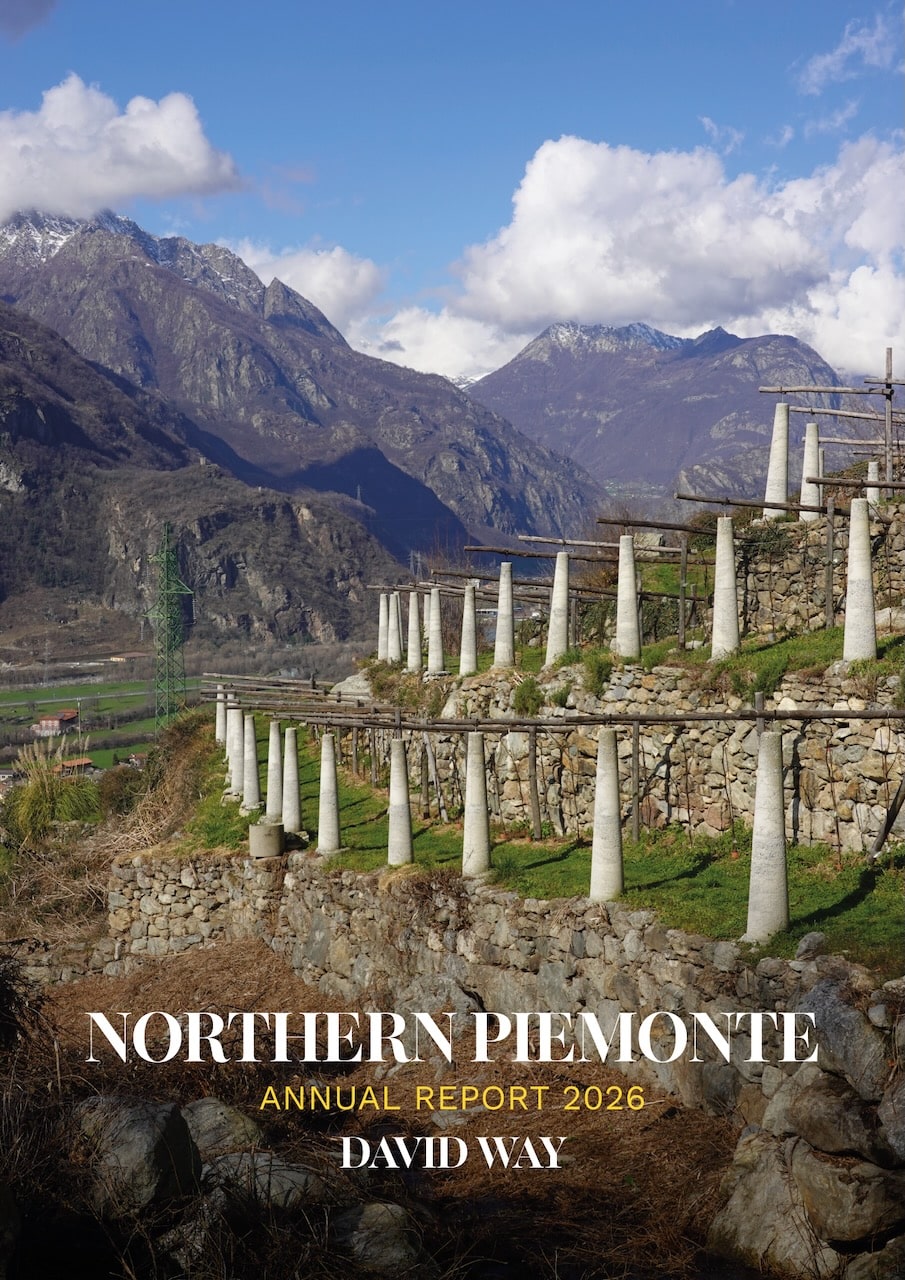
Northern Piemonte
Annual Report
Free annual report covering 13 denominations, 90 wineries and more than 300 wines.
Northern Piemonte comprises thirteen denominations, each with its own distinctive landscape, soils and wine style.
Northwest Piemonte
Carema DOC
Spectacular mountain vineyards on steep stone terraces beneath the Alps. Elegant, long-lived Nebbiolo (Picotendro) with freshness, perfume and finesse.
Caluso DOCG (Erbaluce di Caluso DOCG)
The historic home of Erbaluce, one of Italy’s finest native white grape varieties. Produces outstanding dry, traditional method sparkling and passito wines.
Canavese DOC
A broad denomination surrounding Caluso, producing both red and white wines. Known for Nebbiolo, Erbaluce and a range of approachable regional styles.
Alto Piemonte
Gattinara DOCG
The leading denomination of Alto Piemonte, renowned for structured Nebbiolo from ancient volcanic soils. Capable of producing some of Italy’s longest-lived red wines.
Ghemme DOCG
Historic denomination for Nebbiolo grown on alluvial and glacial soils west of the River Sesia. Elegant, savoury wines combining perfume, structure and longevity.
Lessona DOC
Tiny denomination famous for perfumed Nebbiolo grown on distinctive marine sands. Produces some of Northern Piemonte’s most refined and ageworthy wines.
Bramaterra DOC
Nebbiolo blends from volcanic soils enriched with Vespolina and Croatina. Characterful wines combining freshness, spice and firm structure.
Boca DOC
One of Italy’s smallest classic denominations, producing Nebbiolo blends from ancient volcanic soils. Intense, complex wines with remarkable ageing potential.
Sizzano DOC
One of Piemonte’s smallest historic wine regions, centred on traditional Nebbiolo blends with Vespolina and Uva Rara. Structured age-worthy wines reflecting centuries of local tradition.
Fara DOC
A tiny historic denomination producing traditional Nebbiolo blends with Vespolina and Uva Rara. Elegant, fragrant wines with a distinctive local identity.
Valli Ossolane DOC
Alpine vineyards in the valleys north of Alto Piemonte, including the local Nebbiolo biotype Prünent. Produces distinctive mountain wines from one of Italy’s most northerly wine regions.
Coste della Sesia DOC
The regional denomination west of the River Sesia that overlays and extends beyond the village appellations (e.g., Gattinara). It includes red, white and rosé wines.
Colline Novaresi DOC
The regional denomination east of the River Sesia that overlays and extends beyond the village appellations (e.g., Ghemme). It includes red, white and rosé wines.
Discover Piemonte in greater depth
For a comprehensive guide to the history, vineyards, producers and wines of Northern Piemonte, explore my award-winning book The Wines of Piemonte, available in English and Italian. Both editions include detailed coverage of the history, geology, producers, regulations and wines of Northern Piemonte, together with maps, to help you explore the region. Click either cover for more details.
Why is Northern Piemonte emerging as one of Italy’s most exciting wine regions? This feature explains the region’s remarkable history, cooler climate, extraordinary geological diversity and distinctive winemaking traditions, showing why its thirteen denominations deserve to stand alongside the Langhe among Italy’s finest wine regions.
Explore Northwest Piemonte
Canavese, Caluso, and Carema reveal Piemonte’s alpine diversity, from textured Erbaluce wines to elegant Nebbiolo grown on dramatic terraced slopes. Their glacial landscapes and demanding vineyards produce distinctive wines with a strong sense of place.
A tour of four outstanding Erbaluce producers—Cieck, La Masera, the Cantina Produttori Erbaluce di Caluso and Favaro—showing the remarkable diversity and quality of Northern Piemonte’s leading native white grape.
Travel diary from a month researching Piemonte for The Wines of Piemonte. Includes extensive visits to Gavi.
The consortium’s own website has much excellent material, currently only in Italian.
Explore Alto Piemonte
Profiles of two historic Boca wineries under significant female leadership, tracing their transformation from merchants to respected wine producers.
This post reflects on the region’s annual tasting, plus visits to leading producers. Highlights included Travaglini, Nervi Conterno, Delsignore, La Badina, Centovigne (Castello di Castellengo), Paride Iaretti, Massimo Clerico, Rovellotti and Mirù.
Alto Piemonte’s 10 DOCs and DOCGs produce elegant Nebbiolo wines, with each appellation expressing subtle differences through local terroir and traditional blending rules.
The consortium’s own website has much excellent material, currently only in Italian.
Return to the Piemonte homepage.
