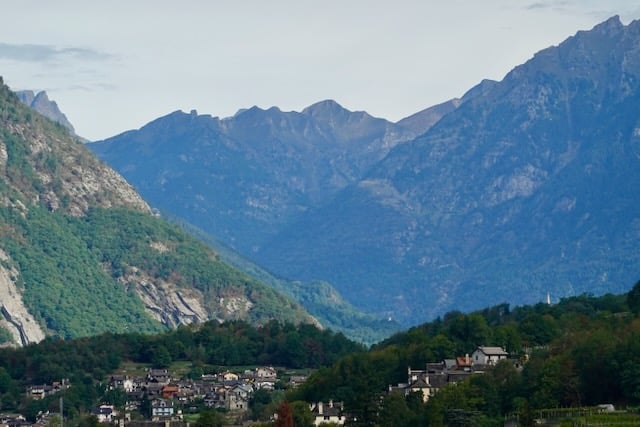
The town of Domodossola is surrounded by Piemonte’s most northerly DOC: Valli Ossolane. Switzerland lies 20 kilometres to the north; Barolo is a distant 225 kilometres to the south. Here, the main variety is Prünent, the biotype of Nebbiolo, specific to Val d’Ossola. In my Northern Piemonte report (free download at www.winefriend.org), I describe it as follows:
The Prünent biotype is lighter in colour and body than the Langhe biotypes, with vivid acidity, fine but present tannins, and a distinctive profile of iron-tinged, herbal red fruit. It also ripens slightly earlier, making it well-suited to a cool climate.
Prünent’s age is well documented. It is named in a parchment dating from 1309, written by Dumino di Pello of Trontano. He left an annual donation to the convent of San Francesco in Domodossola of nine bushels — about 200 litres — of wine. He specified that it had to be made entirely from Prünent, and that it was to be used only for the celebration of Mass. This indicates not just an early mention of viticulture in the valley, but evidence that the variety was already recognised as distinct, name-worthy, and fit for sacramental use more than seven centuries ago.
Vineyard sites in the Ossola valley
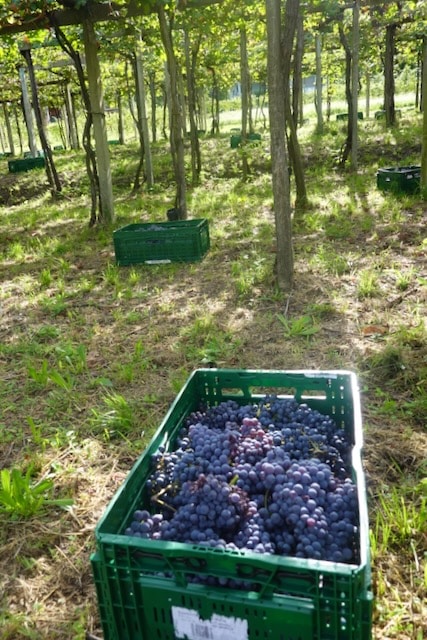
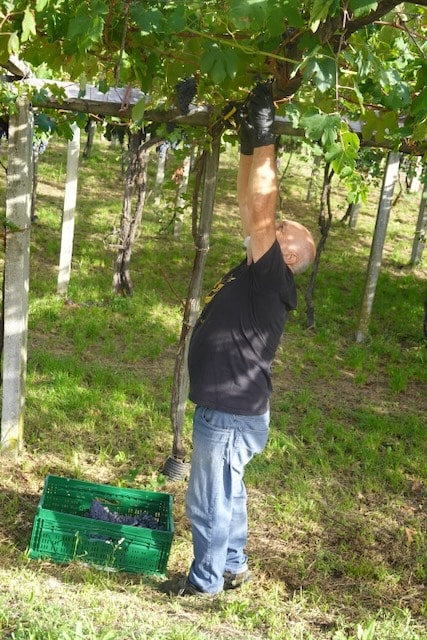
The other unusual feature in the Ossola valley is the pattern of landholding. Whereas most vineyards in the Langhe are owned by the wineries that make the wine, here the pattern is of tiny plots owned by families. In the past, they would have made their wine for home consumption. Today, many of the older generation cling to their plots (“It’s a religion,” says Marco Garrone), but look to the Garrone winery or others to do the work, harvest the grapes and make the wine.
Garrone: key producer
The Garrone vineyards sit at 380–600m in Val d’Ossola, with the highest Nebbiolo parcel at 550m and 600m acting as a practical ceiling beyond which ripening becomes unreliable. Counter-intuitively, though, the best sites are the lower ones: the prime parcels cluster at the mouths of the lateral valleys, a position that shelters them from Atlantic storms behind the high Alps (Monte Rosa looms just out of sight) while still catching the evening mountain storms that supply rain through dry summers. Soils are generally acidic, sandy, and low in clay, with no morainic mixing. The soil composition instead tracks the rock directly beneath, giving reddish, iron-oxide-rich soil in the main area and more manganese elsewhere. One vineyard, near an outcrop of limestone and white marble, is uniquely alkaline — the only one of its kind the family knows of in the zone.
Climate change has pulled the harvest forward dramatically from the traditional 1–10 November window, with this year’s picking already well underway by mid-September. Regrettably, proper snowfall has become a rarity too, with the last significant fall being two decades ago. On the upside, in 2026, disease pressure was so low that spraying was roughly halved compared with the usual regime.
Garrone has grown steadily from half a hectare under the father Roberto’s generation to more than 3 hectares now owned outright, while the total area farmed is around 10 hectares in a given year, depending on how many growers supply their grapes. The company works with roughly 30 growers today, down from about 50 fifteen years ago, as older growers retire and hand their land over. Outright land sales are almost unheard of locally — long-running informal arrangements risk triggering usucapione, Italy’s rule that land used informally for many years becomes the property of the farmer — so owners tend to insist on written agreements once an unwritten tenancy has gone on for some years. That tension over tenure shows up starkly with one historic parcel, documented in the 1309 deed of donation as producing the valley’s finest wine: abandoned for roughly a century, it was replanted in 2020–22, but the land is still owned by the municipality, leaving its long-term future for the family uncertain. This is not unlike the situation of Vigna della Regina in Turin (see the entry on Balbiano in my The Wines of Piemonte).
Pergola or Guyot?
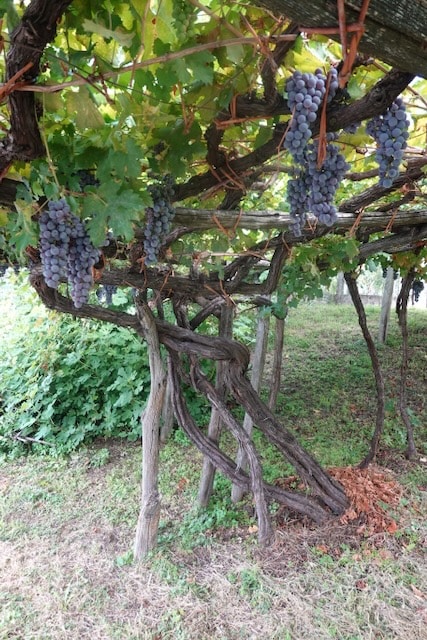
Marco is candid that he’s ‘not super in love with pergola,’ despite it being the traditional system here — he farms some on pergola and some otherwise. Its advantages in this warm site are real: the dense canopy shades the fruit from direct sun and keeps the vines well ventilated, while the abundant leaf cover also helps in cooler years when the season lacks sun. The cost is labour, particularly pruning, which he describes as demanding a huge number of hours each winter. Prünent itself is well-matched for the system: it is naturally vigorous and needs plenty of space. Young pergola plantings need careful bud control to manage that vigour, and the best balance between quality and yield comes only once vines are old. By contrast, Guyot is easier to manage precisely because its shorter pruning naturally limits production, even if overall yields on pergola are higher.
The pergola structures themselves are traditionally built entirely from chestnut wood with no iron wire. This is deliberate since a wired system’s strength can become a liability: the wire itself won’t break, so a single failed post can drag the whole connected framework, stone columns included, down with it, whereas an all-wood structure contains a failure to the post that breaks. Properly seasoned and cut, a wooden post lasts around 30 years, with the buried end rotting fastest.
Family house, ageing cellar and cheese
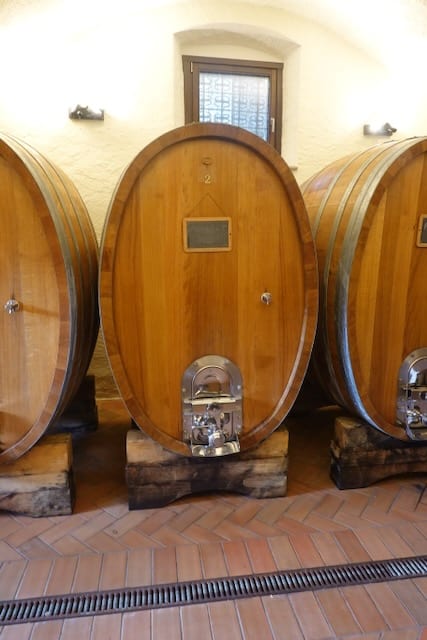
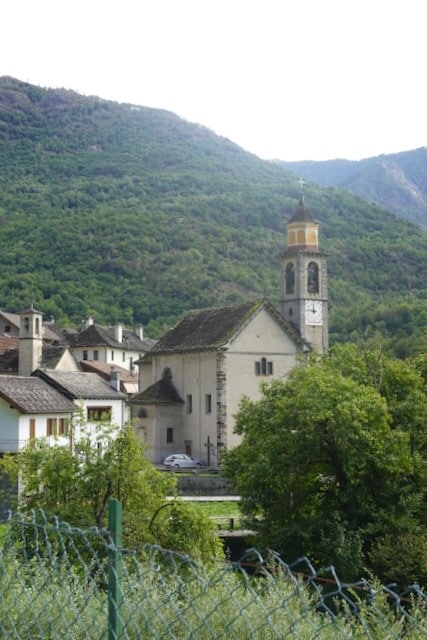
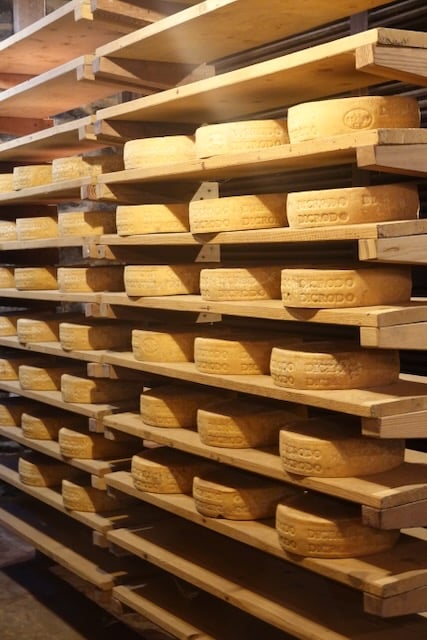
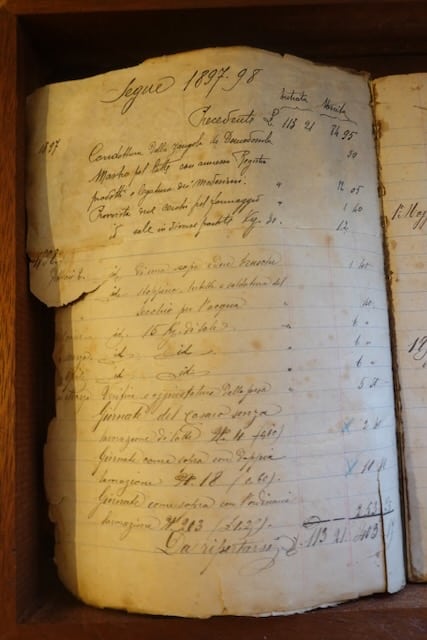
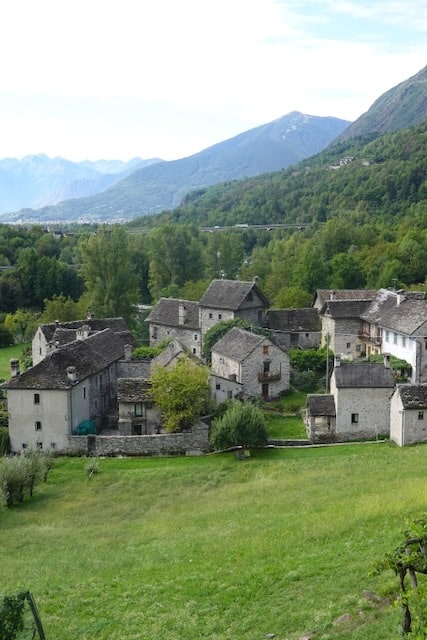
The last part of my visit was with Roberto Garrone. he kindly drove me back to the town, but not before a wonderful detour for a coffee to the circolo, where lunch was going to be had by the picking team, and then to Oira, where the family house, ageing cellar and communal village dairy are located. The cheese register shown below is open for the year 1897-98.
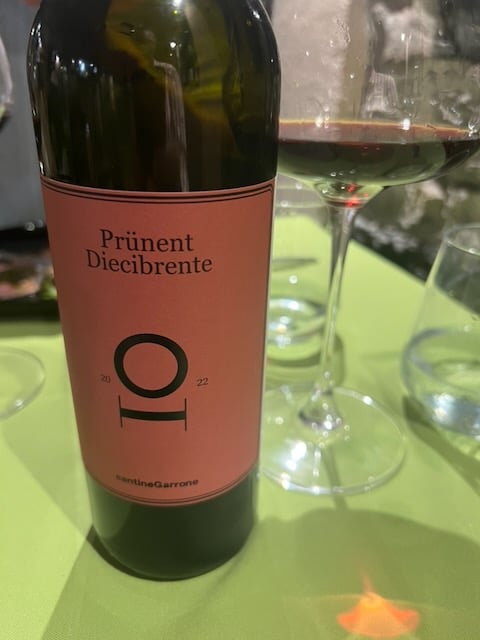
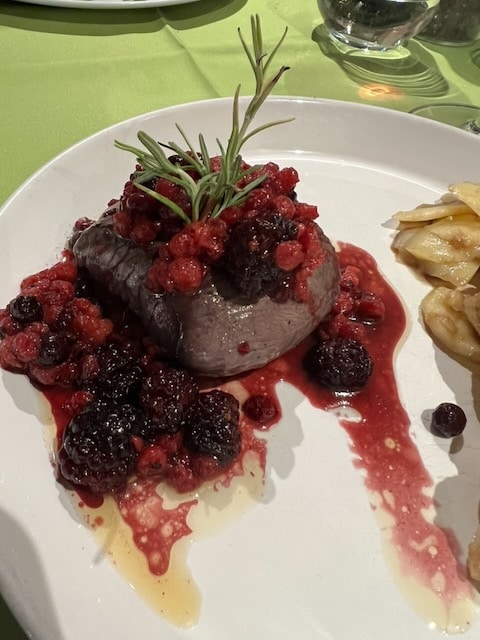
Entirely appropriately, Janet and I were able to enjoy the restaurant’s last bottle of the Garone Valli Ossolane Nebbiolo Superiore 2022 Diecibrente bottling, number 1984 of the total production of 1975 bottles – with a local venison dish.